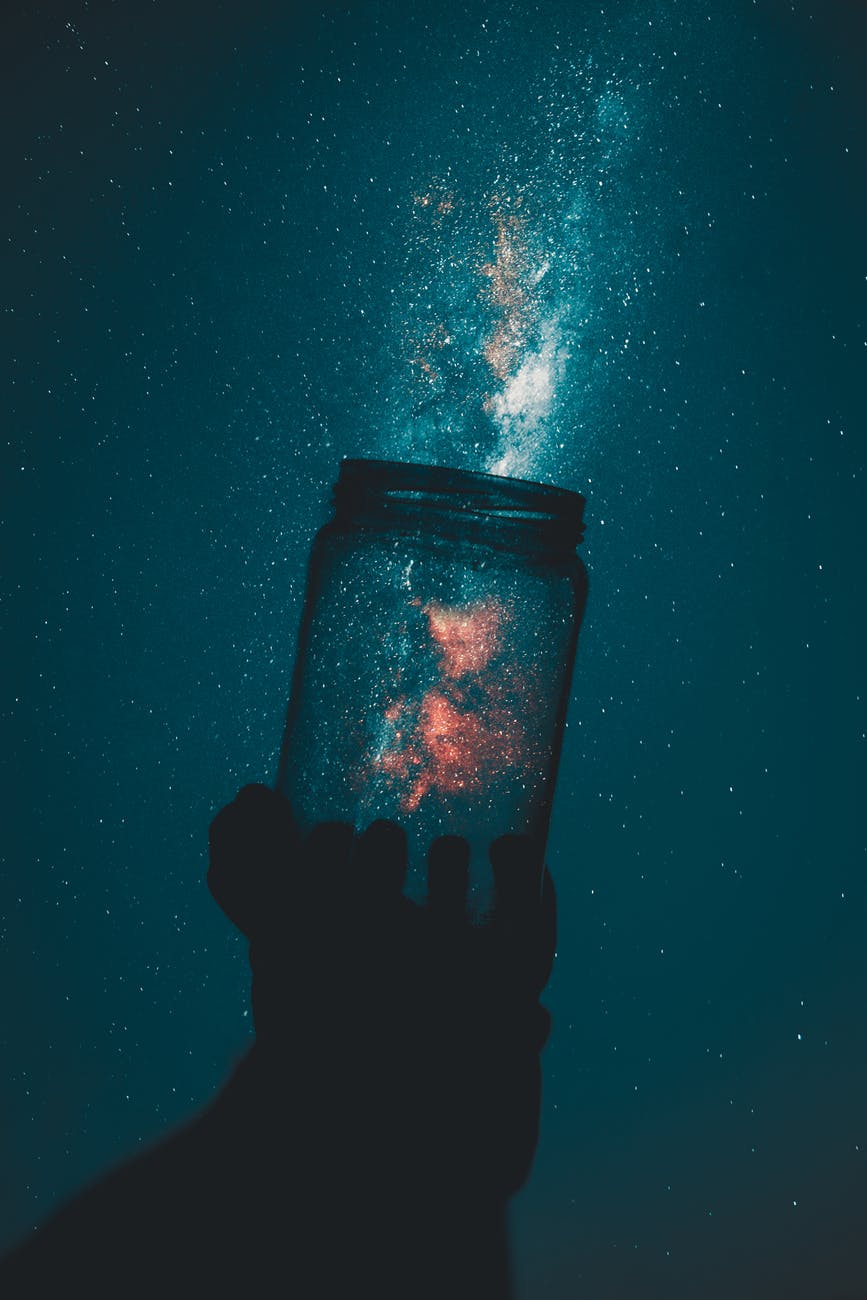
“Space: the final frontier. These are the voyages of the starship Enterprise. Its five-year mission: to explore strange new worlds, to seek out new life and new civilizations, to boldly go where no man has gone before.”
Monologue of Gene Roddenberry’s Star Trek
Many of you may recognize this quote from the popular 60’s sci-fi show, Star Trek. The featured protagonist, Captain James T. Kirk, embarked on many adventures through the universe with his friends aboard their beloved starship Enterprise. The central mission of the crew is to “explore strange new worlds, to seek out new life and new civilizations” and of course, “to boldly go where no man has gone before.” Since the beginning of time, humans have looked upon the stars with a sense of wonder and admiration. Ancient astronomers would even ‘connect the dots’ within the stars forming some of the constellations we know today. They would invent backstories for the gods, goddesses, and creatures they saw. Perhaps, this is why shows like Star Trek became so popular with many people. The central themes behind them restored this same sense of childlike wonder to those who dreamed of space as their ancestors before them.
Shows like this, in addition to the space race, fueled a new sense of excitement for the future. Since the end of the shuttle program, it seems that this sense of wonder and hope for our future has begun to diminish. With war, lack of funding, sickness, and climate change constantly holding us back, it has been extremely difficult to send humans back to the moon and beyond. Although NASA’s Artemis program and the rise in space tourism by eccentric billionaires like Elon Musk, Jeff Bezos, and Sir Richard Branson, have added new excitement in the space industry, there are still those who show intense disinterest and would rather drop the space program all together. The reasoning behind this belief is that we need to focus on saving our own planet before we destroy another one. Furthermore, there are still many individuals who are suffering on this planet and therefore it would be a waste of money and resources to invest in space exploration.
Others believe that interplanetary exploration is a necessity as our planet is doomed to perish in the future. The only hope of saving humanity is to broaden our reach and acquire multiple home planets. In a sense, both of these viewpoints are equally correct in their own way. Perhaps we should focus on nurturing our own planet and its people into a perfect paradise before we look for another home. However, it would also be the best idea to reach out into the stars for humanity’s sake, for the innovation of technology, better understanding of the universe, and the inspiration of people everywhere.
If we take a look at the pros and cons of traveling to space, the pros seem to outweigh the cons. For instance, in regards to the climate change argument, we can see that space travel actually helps us to better understand this issue in some ways. Most of the climate data and models researchers examine come from satellites put into orbit by climate scientists working for NASA and other affiliates. A lot of deep oceanic exploration is conducted by climate scientists and astrobiologists. Additionally, as we reach further out into space, we will encounter many new problems and the solutions to these problems will lead to new technologies that will benefit humanity. The biggest issue is that of food and how to grow it. Designing new food production technologies for astronauts will inevitably lead to methods that can be used to grow and distribute nutritious foods in impoverished areas of the world. NASA’s Deep Space Food Challenge that began early this year has been a prime example. The space agency asked the public to design a sustainable food production system that could help feed astronauts as well as those suffering from food insecurities on Earth. A technological feat more interesting is that of 3D printing. Astronauts on the International Space Station are conducting research that aims to use microgravity to 3D print human organs and other tissues. With this technology, humanity will no longer have to rely on organ donations or worry about bodily rejections due to an insufficient match.
While the benefits of space travel for humanity may seem endless, the greatest reason for exploration is this: humanity has always been, and will always be, curious. As Carl Sagan once said, “Somewhere, something incredible is waiting to be known.” Without curiosity, humanity would be nowhere. You would not be here reading this blog post on whatever device you are using if your ancestors did not bring you here through curious exploration and risk-taking. The citizens of the countries that had the first maritime explorers probably felt the same way some of you do about space travel. They probably thought it was a waste of time and money but there is opportunity in exploration. There is hope in curiosity.
Those of you who think space exploration is a waste of time and money, that humanity should focus on saving our planet as well as our own suffering species, ask yourselves this: “What am I doing to help?” If the answer is nothing then do you really even get an opinion on the matter? If you are doing your part to help save this planet, if you are donating and volunteering in your local food pantry or Red Cross or Peace Corps, good for you. You are doing your part. My next question for you is: “Why can’t we do both?” Why can’t we go to space and help our people and our planet too? Is that so impossible? If so, why? Okay, that might be a few more questions than was expected but its something to consider.
Everyone has differing opinions. It’s what keeps things interesting between humans. Sometimes, this can be a good thing while other times, it can lead to intense conflict and even war. We must all remember how little we are in this endless universe. All we have is each other and while nothing we do may matter in the vast scheme of things, we do have the power to change the world around us and help one another. There are over seven billion humans scattered throughout this big ball of rock and water. We have the power to do really great things. We just have to believe in ourselves individually and as a whole.
With that, I will leave you all with some inspiring space-related quotes:
“When I orbited the Earth in a spaceship, I saw for the first time how beautiful our planet is. Mankind, let us preserve and increase this beauty and not destroy it.”
Yuri Gagarin (Russian Cosmonaut- First human in space)
“Don’t tell me man doesn’t belong out there. Man belongs wherever he wants to go-and he’ll do plenty well when he gets there.”
Wernher Von Braun (Aerospace Engineer)
“A sense of the unknown has always lured mankind and the greatest of the unknowns today is outer space. The terrors, the joys, and sense of accomplishment are epitomized in the space program.”
William Shatner (American Actor- Captain Kirk- Star Trek)
“Every generation has the obligation to free men’s minds for a look at new worlds…to look out from a higher plateau than the last generation.”
Ellison S. Onizuka (First Asian-American Astronaut to fly in space)
“All of a sudden, space isn’t friendly. All of a sudden, its a place where people can die…many more people are going to die. But we can’t explore space if the requirement is that there be no casualties; we can’t do anything if the requirement is that there be no casualties.”
Isaac Asimov (American Writer)
“Science is not a boy’s game, its not a girl’s game. Its everyone’s game. It’s about where we are and where we’re going. Space travel benefits us here on Earth. And we ain’t stopped yet. There’s more exploration to come.”
Nichelle Nichols (American actress-Lieutenant Uhura-Star Trek)
Reference Materials:
“Become a Volunteer.” How To Volunteer | American Red Cross, https://www.redcross.org/volunteer/become-a-volunteer.html#step1.
Hall, Loura. “Deep Space Food Challenge.” NASA, NASA, 12 Jan. 2021, https://www.nasa.gov/feature/deep-space-food-challenge/.
Johnson, Michael. “3D Printing, Biology Research Journey Back to Earth in Spacex’s Dragon.” NASA, NASA, 3 Apr. 2020, https://www.nasa.gov/mission_pages/station/research/news/3d-printing-biology-research-journey-back-to-earth-in-spacex-20-dragon.
“Oceanography.” NASA, NASA, https://science.nasa.gov/earth-science/focus-areas/oceanography.
“Taking a Global Perspective on Earth’s Climate.” NASA, NASA, 17 Sept. 2021, https://climate.nasa.gov/nasa_science/history/.
writers, TEAM GOODNET Made up of. “5 Stellar Environmental Volunteer Opportunities.” Goodnet, 18 Oct. 2020, https://www.goodnet.org/articles/5-stellar-environmental-volunteer-opportunities-list.